
What is stout? A dark beer family from dry to dessert
Stout is a family of dark, roasty beers. See how dry Irish, milk, oatmeal, tropical, foreign extra, American, and imperial stout differ.
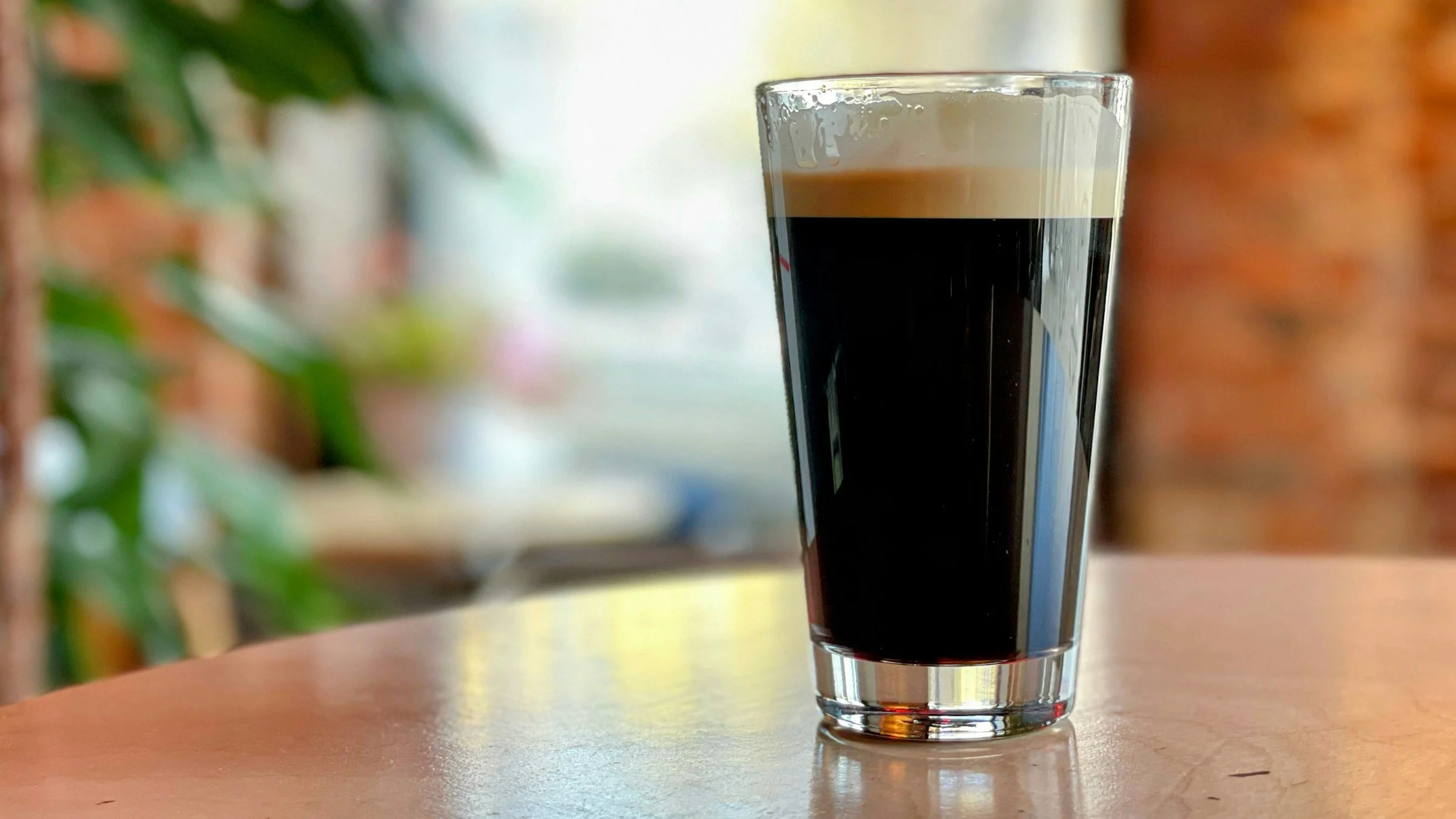
Stout is a family of dark beers built on roasted malt or grain, usually black or close to it, with coffee and chocolate flavors. It grew out of London porter and now runs from light, dry Irish stout to sweet milk stout and strong imperial stout. Strength, sweetness, and body vary widely by type.
Styles in this family
- PorterStout's brown, usually gentler ancestor, with chocolate, caramel, and toast.See the style
- Irish stoutBlack, dry, and coffee-like, at 3.8 to 5 percent ABV.
- Irish extra stoutFuller and stronger, with coffee and dark chocolate.
- Sweet stout (milk stout)Lactose adds sweetness and body, like coffee and cream.See the style
- Oatmeal stoutOats give a silky body and a medium-sweet to medium-dry finish.
- Tropical stoutSweet, fruity, and smooth. Tropical refers to origin, not fruit.
- Foreign extra stoutStronger and fairly dry, with prominent roast.
- American stoutRoasty, bitter, and hoppy, often with citrusy or resiny hops.
- Imperial stoutVery strong and intense, with roast, dark fruit, and warmth.See the style
What makes a beer a stout?
Roast. Stouts get their color and much of their flavor from dark roasted malts or grains, often enough to turn the beer black. The BJCP Irish Stout guide describes that roast as often similar to coffee, and most stouts carry some mix of coffee, dark chocolate, and cocoa.
Stout also has a family tree. Porter took shape in London in the early 1700s, and stronger versions were sold as "stout porters." Over time, stout became a name of its own. The BJCP English Porter guide still calls porter a predecessor to all stouts.
Stout is not heavy or strong by definition. Irish stout can be as low as 3.8 percent ABV, with a body that starts at medium-light. Imperial stout runs from 8 to 12 percent. The creamy texture of many draft stouts comes from a nitro pour, not the recipe, as our nitro beer guide explains.
What are the main types of stout?
The BJCP 2021 guidelines split stout into several styles. Grouped by how they drink:
Dry and roasty
- Irish stout: black, with pronounced coffee-like roast and a finish from dry to moderately balanced. 3.8 to 5 percent ABV. The BJCP notes that Dublin-type versions are drier and more bitter, while Cork-type versions are sweeter, with more chocolate.
- Irish extra stout: a fuller-bodied, stronger version with coffee and dark chocolate, at 5 to 6.5 percent ABV.
- Foreign extra stout: very dark, rich, moderately strong, and fairly dry, with prominent roast, at 6.3 to 8 percent ABV. It is also called export stout.
Sweet and smooth
- Sweet stout, often sold as milk stout: lactose, a sugar that brewer's yeast does not fully ferment, adds sweetness and body. The BJCP compares it to coffee and cream or sweetened espresso. 4 to 6 percent ABV. Our milk stout guide explains why it is not dairy-free.
- Oatmeal stout: oats give a silky, velvety body, and the finish runs medium-sweet to medium-dry. 4.2 to 5.9 percent ABV.
- Tropical stout: very dark, sweet, fruity, and moderately strong, with smooth roast and no burnt harshness. It began as a Caribbean adaptation of foreign extra stout. "Tropical" refers to where it comes from, not to tropical fruit.
Big and bold
- American stout: fairly strong, highly roasted, and bitter, with citrusy or resiny American hops. 5 to 7 percent ABV.
- Imperial stout: intensely flavored and very strong, with roast, dark fruit, and a warming, bittersweet finish. 8 to 12 percent ABV. Our imperial stout guide covers serving, aging, and barrel-aged versions.
Coffee, vanilla, chocolate, and barrel-aged stouts are built on top of these base styles. See how coffee gets into beer and what barrel-aged beer is.
Stout vs porter
They share a history, so the line blurs. In general, stout pushes roast harder, often toward coffee, and tends to be darker and drier. Porter leans toward chocolate, caramel, and toast, and usually stops at brown to very dark brown. The BJCP sums up one clear case: Irish stout is black, and English porter is brown.
Strength does not separate them. A dry Irish stout can be lighter than an American porter, and a milk stout can be gentler on roast than a robust porter. Read our porter page for that side of the family, and porter vs stout for a side-by-side comparison.
Where should you start?
Pick by what you already like.
- If you like black coffee and a dry finish, start with Irish stout.
- If you like sweet coffee drinks or dessert, try a milk stout.
- If you want a smooth texture without much sweetness, try oatmeal stout.
- If you like hoppy pale ales, try an American stout.
- If you want something to sip slowly, try an imperial stout in a smaller pour.
Serve stout cool, not ice cold. Our temperature guide suggests 48 to 55°F for porter and stout and 50 to 57°F for imperial stout. A pint or nonic works for everyday stouts, while a tulip or snifter suits strong ones, as our glassware guide explains. Unless the brewery says a stout is meant to age, drink it by the date on the package; our guide to whether beer expires explains why.
For food, match intensity. Roasty stouts work with grilled and roasted dishes, and a dessert stout should be at least as sweet as the dessert. See how to pair beer with food for more.
Related questions
Why is stout black?
Stout gets its color from malts or barley roasted until very dark. The same grains add its coffee, chocolate, and toasty flavors.
Does stout have more alcohol than other beer?
Not necessarily. Irish stout runs 3.8 to 5 percent ABV, while imperial stout runs 8 to 12 percent. Check the label or menu for the beer in front of you.
Is stout always served on nitro?
No. Nitro is a way of serving beer, not part of the style. Many stouts are poured with ordinary carbonation, and other styles can be served on nitro.
Does stout contain dairy?
Most stouts do not. Milk stout contains lactose, a sugar from milk, so it is not dairy-free. Check the label if you avoid milk.


