
What does ABV mean in beer? Strength, serving size, and taste
ABV tells you how much alcohol a beer contains by volume. Learn how to compare strengths, serving sizes, and flavor without relying on color.
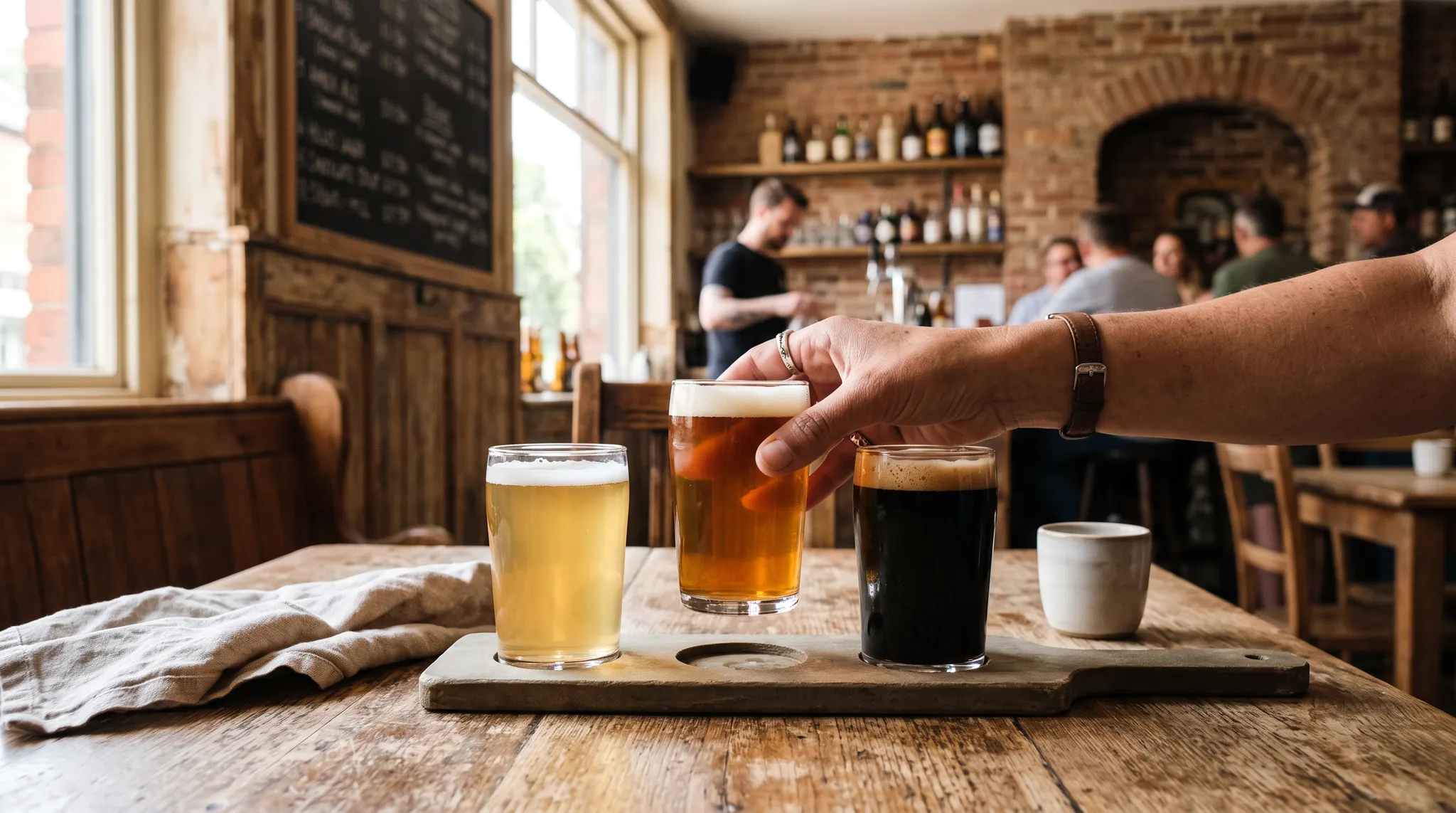
ABV means alcohol by volume. A beer labeled 5% ABV contains alcohol equal to 5% of its total liquid volume. The number tells you strength. It does not tell you whether the beer is dark, sweet, bitter, heavy, or good.
How should you read ABV?
ABV becomes useful when you consider serving size. A smaller pour of a strong beer can contain about as much alcohol as a larger pour of a lower-strength beer.
| Pour | ABV | Approximate pure alcohol |
|---|---|---|
| 16 ounces | 4% | 0.64 ounces |
| 12 ounces | 5% | 0.60 ounces |
| 8 ounces | 9% | 0.72 ounces |
The calculation is simple: serving volume multiplied by ABV expressed as a decimal. It is not a recommendation about how much to drink. It is a way to compare pours that look different.
The Cicerone Certified Beer Server syllabus notes that stronger beers should be served in smaller glasses. Good taprooms often use this approach even when the menu does not explain it.
Does higher ABV mean stronger flavor?
Not automatically. Alcohol can add warmth, body, and perceived sweetness, but beer flavor comes from the whole recipe. Malt, hops, yeast, water, fermentation, aging, and added ingredients all matter.
A lower-ABV smoked beer can taste more intense than a stronger golden ale. A strong lager can look pale and finish clean. A dark stout can be moderate in alcohol. Color is a particularly bad shortcut for strength.
Why do strong beers sometimes taste sweet?
Brewers need more fermentable material to create more alcohol. Some strong beers retain enough malt sweetness and body to make that strength feel rich. Alcohol itself can also read as warming or slightly sweet.
Other strong beers ferment very dry. Belgian golden strong ale is the classic reminder that pale color and a lively finish do not mean low alcohol. Read the number rather than guessing from appearance.
What is a session beer?
Session beer is an informal category for beer designed around drinkability and lower alcohol. There is no single flavor profile. A session beer can be hoppy, malty, dark, pale, tart, or crisp.
The practical goal is balance at a lower strength. That can be difficult because reducing fermentable material can also reduce body. The best examples still feel complete.
How should ABV affect a beer flight?
Taste lower-strength and more delicate beers before stronger, sweeter, smokier, or more bitter examples. Strong flavors and alcohol can tire your palate and make the next sample harder to read.
Our guide to ordering and tasting a beer flight covers sequencing, sample size, and note-taking without turning the table into an exam.
What should you ask at a taproom?
If the ABV is not listed, ask. If it is listed but the pour size is unclear, ask about that too. A useful menu should make both available.
When choosing between two beers, combine strength with one flavor question: Is it dry or sweet? Crisp or full? Bitter or soft? That tells you more than ABV alone.
Related questions
Is dark beer stronger than light beer?
No. Color comes mainly from malt choices. Pale beers can be strong, and dark beers can be moderate or low in alcohol.
Does high ABV mean more calories?
Alcohol contributes calories, but the total also depends on residual carbohydrates and the serving size. ABV alone does not give a complete calorie count.
Why are some beers served in small glasses?
Higher-strength beers often receive smaller pours for responsible service and because their flavor intensity suits slower drinking.


