What is a beer flight? How to order and taste one
A beer flight is a set of smaller pours served together. Learn how to choose the lineup, taste in a useful order, take notes, and pace yourself.
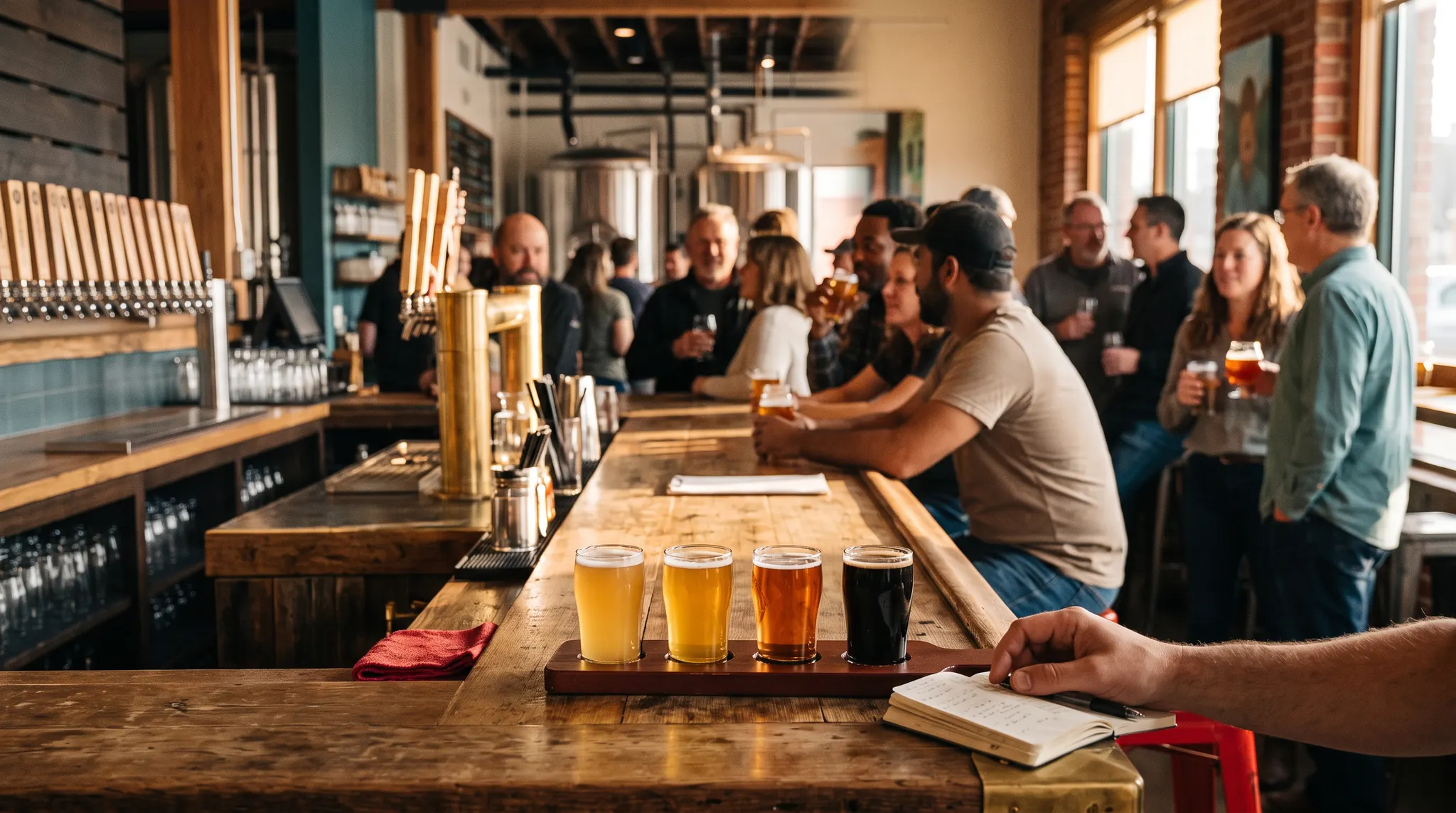
A beer flight is a set of smaller pours served together so you can compare several beers without ordering a full glass of each. Some flights are chosen by the brewery. Others let you build your own. The best flight has a clear comparison idea, a known order, and enough pacing to notice each beer.
How does a beer flight work?
The taproom serves several samples on a board, tray, or marked mat. The number of beers and the pour size vary by venue, so check the menu rather than assuming one standard.
A flight can answer a useful question:
- How does one brewery handle four different styles?
- What changes between two pale lagers?
- How do several IPAs differ in aroma, bitterness, and finish?
- What happens as malt moves from pale to toasted to roasted?
- Which beer do you want as a full pour?
A random lineup can still be fun. A lineup with a purpose is easier to remember.
How should you order a beer flight?
Use this checklist:
- Choose one comparison. Style, ingredient, strength, fermentation, or color can all work.
- Ask what is freshest or most representative. Staff may steer you toward a beer that is pouring especially well.
- Confirm the order. Make sure you know which glass is which.
- Check the total serving size. Smaller glasses still add up.
- Add water. A water glass helps with pacing and resets.
- Keep one line of notes. Record the difference you want to remember.
If the bar is busy, respect the taproom’s flight policy. A preset flight may move faster and reflect how the brewery wants the beers compared.
What order should you taste a beer flight?
Move from more delicate to more intense when you can. That often means starting with a crisp lager or subtle wheat beer before a firmly bitter IPA, a tart sour, a smoky beer, or a rich high-alcohol stout.
Color is a weak shortcut. A pale double IPA can overwhelm a darker but softer lager. Ask the bartender how the flight was designed, then consider:
- Alcohol strength
- Bitterness
- Roast
- Smoke
- Sourness
- Sweetness
- Strong spice or fruit additions
There is no penalty for moving back to an earlier glass. Comparison is the point.
How do you taste each beer?
Cicerone’s beer evaluation guidance breaks the experience into appearance, aroma, flavor, and mouthfeel. CraftBeer.com adds finish and aftertaste as useful parts of the changing picture.
Use the same four-step loop for every glass:
- Look: Note color, clarity, foam, and carbonation.
- Smell: Take a few short sniffs before the glass warms too much.
- Taste: Notice sweetness, bitterness, acidity, flavor, carbonation, and body.
- Finish: Ask what remains after swallowing and whether you want another sip.
You do not need a score. Write one sentence: “Bright citrus aroma, firm bitterness, dry finish,” or “Soft bread-like malt, low bitterness, clean ending.” That note gives your next recommendation something to work with.
A flight does not need to be a test
Beer vocabulary can help, but it should not make the table tense. Plain descriptions are useful. “Like grapefruit peel,” “soft and bready,” “tart like lemon,” or “dark but not heavy” can communicate more than a stack of technical terms.
If you cannot name a flavor, compare the beers directly. Which one feels drier? Which aroma is stronger? Which finish lasts longer? Which glass are you returning to?
How do you pace a flight?
Know the listed alcohol by volume and total pour size. Drink water. Eat when appropriate. Share if the venue allows it. Stop when comparison becomes less clear.
The goal is not to finish every sample. It is fine to leave a beer you do not enjoy. Responsible tasting protects the experience for you, the people at your table, and the taproom staff.
What should you order after the flight?
Choose the glass that taught you something useful, not automatically the highest score. If you liked crispness, follow with the pilsner vs lager comparison. If hop aroma led the flight, read What is an IPA?. If you are recommending a beer to someone else, use our simple recommendation framework.
Related questions
How many beers are in a flight?
The number and pour size vary by venue. Check the menu or ask staff.
What order should you drink a beer flight?
Move from delicate to intense when possible, but consider alcohol, bitterness, roast, smoke, sourness, and sweetness instead of relying on color alone.
Are beer flights meant to be shared?
They can be. Sharing can make comparison easier and lower the amount each person drinks.