The best beer recommendation is the one you actually remember
A useful beer recommendation starts with the drinker, the place, and what they already enjoy. Use this simple framework to make better picks.

A useful beer recommendation starts with the person, not the style chart. Ask what they already enjoy, consider where they will drink it, explain one meaningful difference, and leave room for their own reaction.
Start with the person, not the style
Ask what they already like, even when the answer is not a beer style. Crisp, bright, roasty, bitter, tart, light, rich, or easy to drink can be more useful than asking someone to name a category.
The goal is not to prove how much you know. The goal is to help someone find a beer they will want to order again.
Try translating familiar preferences into a useful first move:
- Crisp and light: Start with a pilsner, helles, kölsch, or another clean, lower-intensity option.
- Toasty and malty: Look toward amber lager, Vienna lager, märzen, brown ale, or a malt-led English style.
- Citrusy and bitter: Compare a clear American IPA, pale ale, or another hop-forward beer with a dry finish.
- Dark but not heavy: Try a schwarzbier, dry stout, or another dark beer where roast does not require sweetness.
These are practical starting points, not universal taste rules.
Read the room
The same beer can land differently depending on the place and the moment. A long taproom conversation, a quick stop before dinner, a brewery patio, and a crowded festival call for different kinds of advice.
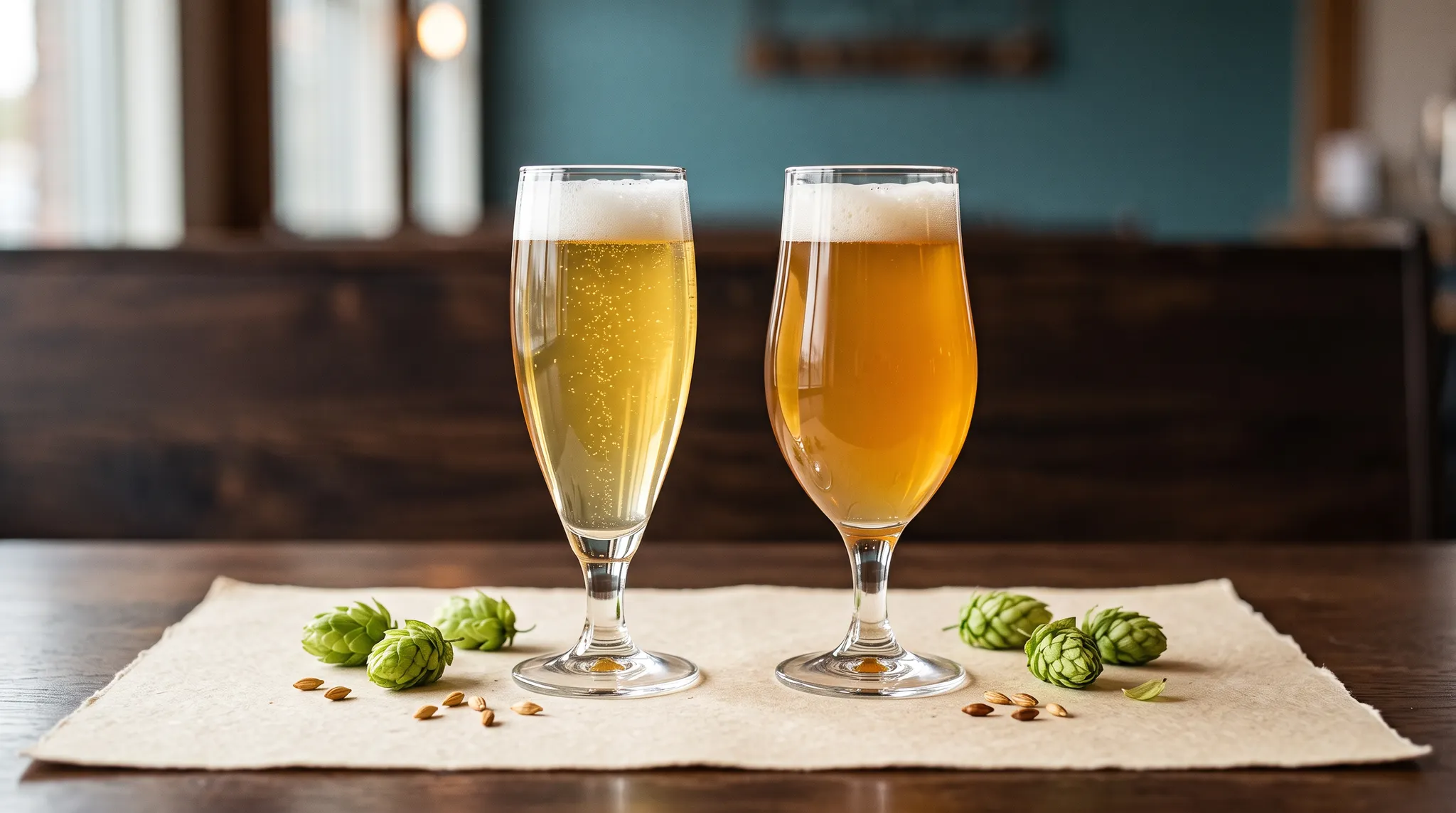
Ask how much time the person has, whether they are eating, and whether they want a full pour or a few comparisons. A beer flight can be more useful than one confident recommendation when the person wants to learn by tasting.
Explain one useful difference
Give people one reason to remember the beer. It might be the clean finish, toasted malt, bright citrus, soft body, firm bitterness, or the way it works with food.
One clear detail beats a speech full of tasting vocabulary. “This one is drier and more bitter” gives the drinker something they can test. “This is a world-class expression of modern hopping” gives them a brochure.
If the choice is between familiar categories, use a direct comparison. Every pilsner is a lager, but not every lager is a pilsner. Our pilsner vs lager guide shows how that category difference reaches the glass.
Leave room for their reaction
A recommendation is a hypothesis, not a verdict. Ask what worked and what did not. The answer improves the next choice.
Someone may like an IPA’s citrus aroma but dislike the bitter finish. That does not mean the recommendation failed. It means the next suggestion should keep the aroma and soften the bitterness. What is an IPA? explains why the style family leaves room for both traits.
A simple beer recommendation checklist
Before naming a beer, ask:
- What drink or beer do you already enjoy?
- Do you want crisp, malty, hoppy, tart, dark, light, strong, or easygoing?
- Are you drinking with food, comparing samples, or settling in for a full pour?
- What one difference should you explain?
- What did the person notice after the first taste?
If you cannot answer the second question, offer two contrasting small pours rather than one oversized explanation.
Related questions
What if someone says they do not like beer?
Ask what they do enjoy. Wine, coffee, citrus, bread, chocolate, tea, and sparkling drinks can reveal useful flavor and texture preferences. Keep the first pour small and the explanation plain.
Should you recommend your favorite beer?
Only when your preference matches theirs. Your favorite beer is evidence about you, not automatically about the person asking.
How many choices should you offer?
Two or three clear options are usually easier to compare than a long list. Explain the main difference, then let the drinker choose.
Good beer deserves a clear opinion and an open invitation.