Does the beer glass matter? What shape changes and what it does not
A glass improves aroma, appearance, and foam, but cleanliness matters more than owning every specialty shape. Here is what changes in the glass.

The beer glass matters, but not because every style requires a cabinet full of specialty shapes. Pouring beer into a clean glass opens the aroma, shows the color and foam, and releases some carbonation. Shape can influence how those aromas reach you. Cleanliness and a sensible serving size matter more than chasing perfect glassware.
Why pour beer into a glass?
The biggest advantage is aroma. Drinking through the narrow opening of a can or bottle limits how much aroma reaches your nose. A glass gives the beer room to form a head and lets you smell it before and during each sip.
Cicerone's guide to pouring beer into a glass also points to appearance and carbonation. You can see color, clarity, and foam, while the pour releases some dissolved gas.
That does not mean packaged beer is wrong. A can is practical and protects beer from light. The glass simply gives you more sensory information.
Does glass shape change flavor?
Shape changes aroma delivery, head space, and the way beer reaches your mouth. A narrower opening can concentrate aroma. A wide opening can release it quickly. A tall glass can make room for the large head expected from wheat beer. A smaller tulip or snifter can suit a strong beer that should not arrive as a full pint.
These effects are real, but they do not rescue stale or poorly made beer. The difference between a clean glass and a dirty glass is usually more important than the difference between two reasonable glass shapes.
What is a beer-clean glass?
A beer-clean glass has no grease, oil, soap film, lipstick, food residue, or lingering sanitizer that interferes with foam.
Look for these signs:
- Foam forms and holds normally.
- Rings of foam, called lacing, remain after sips.
- Streams of bubbles do not cling randomly to residue on the side of the glass.
- The beer has no detergent or sanitizer aroma.
Cicerone's glass-cleaning guide notes that bubbles clinging to the submerged sides can indicate a glass that is not beer clean. Poor head retention can be another clue.
Should a beer glass be frozen?
Usually not. Frosted glasses can make beer too cold, cause excess foaming, and introduce frozen water or sanitizer residue. Very cold temperatures also mute aroma and flavor.
A cool or room-temperature clean glass is a better default. The beer itself should arrive at an appropriate temperature.
What glass should you use at home?
One clean, clear glass with enough room for foam covers most situations. A stemmed tulip is useful for aromatic or stronger beer. A tall wheat-beer glass helps manage a large head. A straightforward pint or nonic works for everyday pours.
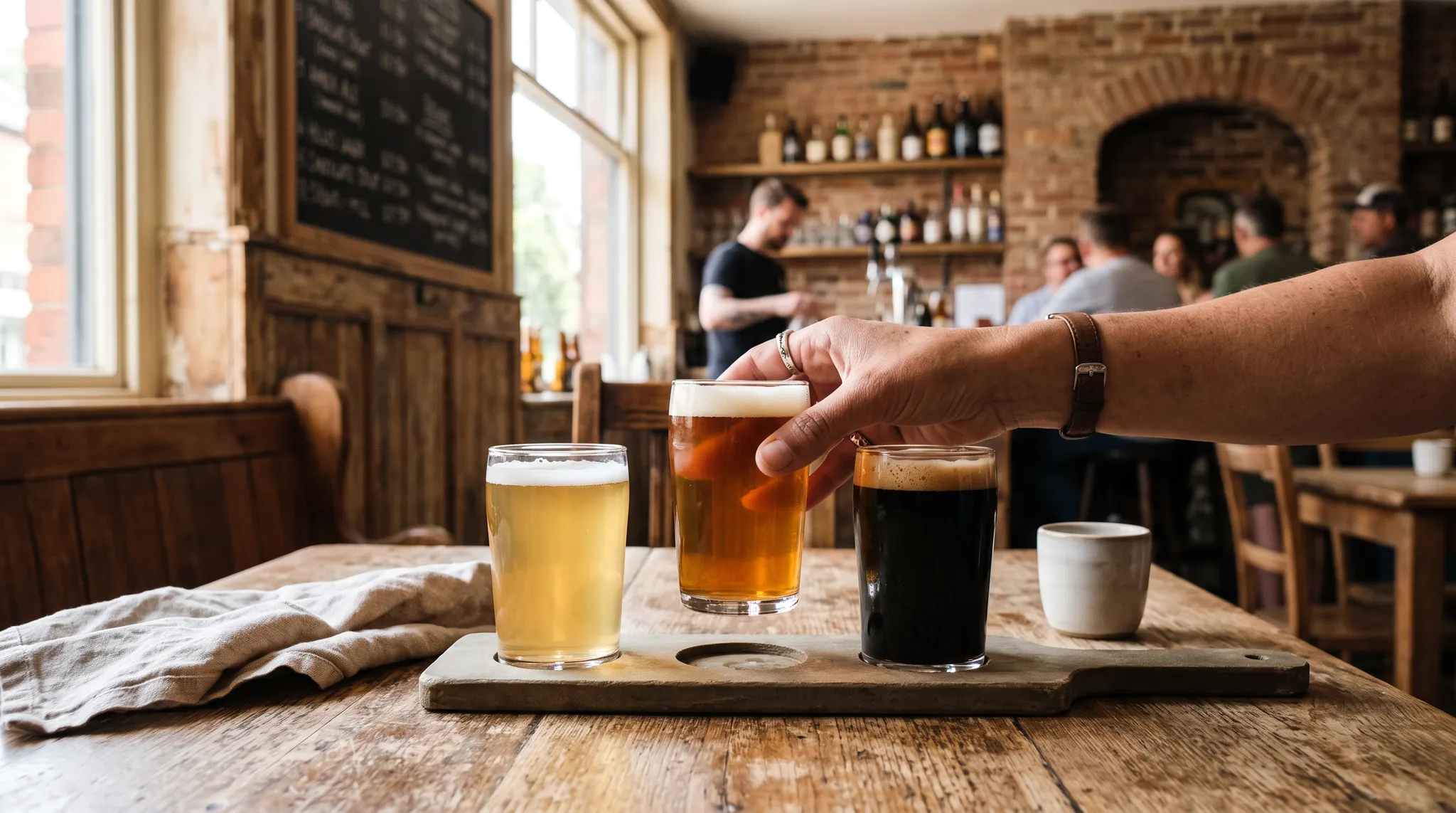
If you only own one option, use it. Leave room at the top and pour with enough energy to form a proper head. Our beer flight guide recommends using the same glass shape when comparing samples so the glass does not become another variable.
Does branded glassware improve the beer?
A brewery may choose a glass that suits its intended pour, aroma, and foam. Branding itself does not change flavor. Shape, size, cleanliness, and temperature do.
Related questions
Is drinking beer from a can bad?
No. Cans protect beer from light and are practical. A glass simply gives you more access to aroma, appearance, and foam.
Why are bubbles sticking to my beer glass?
Bubbles clinging to the submerged sides often collect on residue or tiny surface imperfections. In a bar, widespread clinging can be a sign that the glass is not beer clean.
Do I need a separate glass for every beer style?
No. A few clean, versatile glasses are enough for most drinkers.