What is draft beer? Tap, keg, and freshness explained
Draft beer travels from a keg through a balanced, cooled system to the faucet. Learn how gas, temperature, clean lines, and turnover affect the glass.
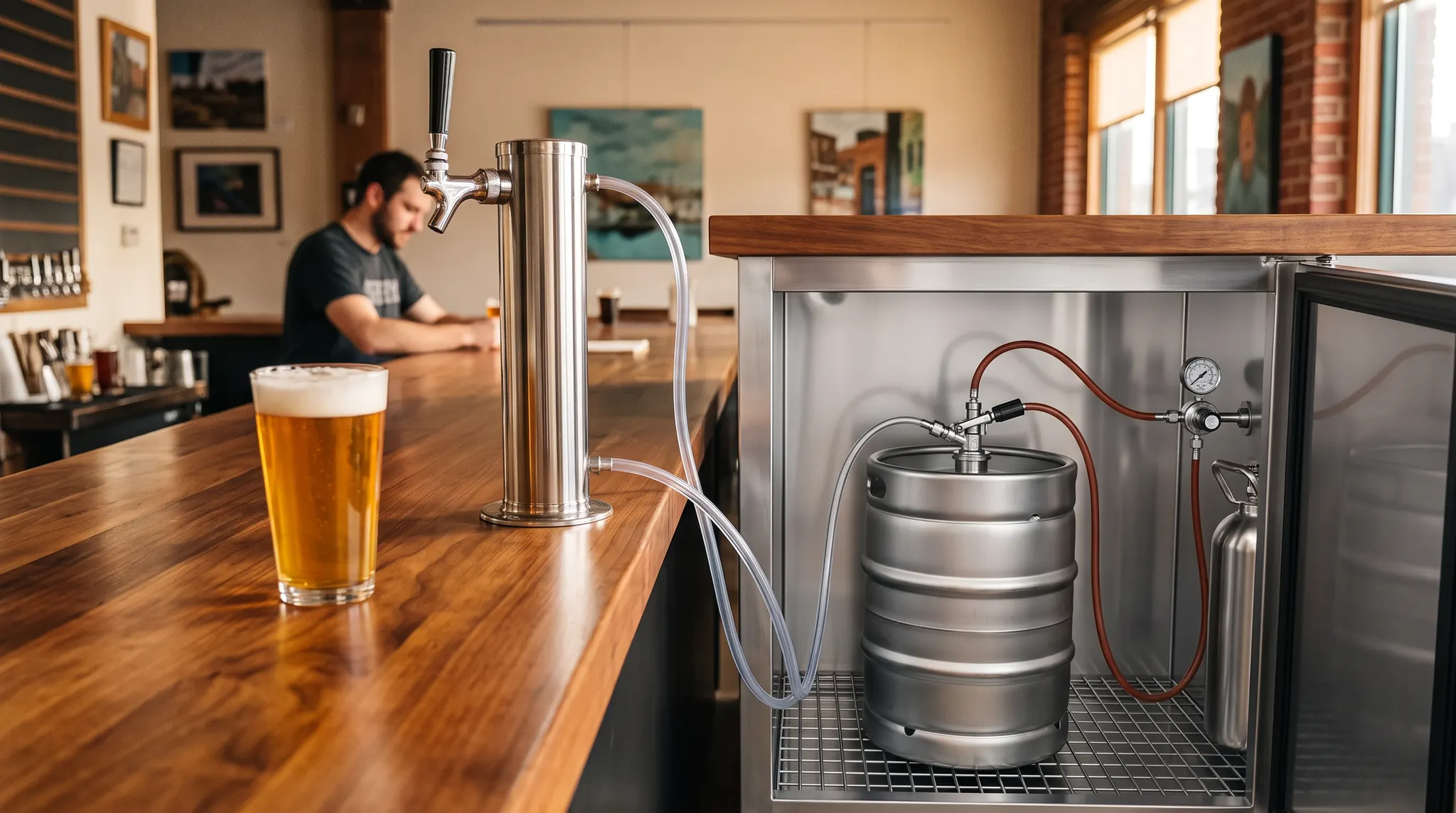
Draft beer is beer dispensed from a keg or other bulk container through a draught system to a faucet. Gas pressure moves the beer, cooling keeps it at the intended temperature, and balanced lines control the pour. Draft is not automatically fresher than cans or bottles. System care and keg turnover decide a lot.
How does draft beer get from keg to glass?
A basic draught system has a short path:
- Keg: Holds the beer.
- Coupler: Connects the keg to the gas and beer lines.
- Gas: Applies pressure so beer can move while helping maintain intended carbonation.
- Beer line: Carries beer toward the faucet.
- Cooling: Keeps the keg and beer at a controlled temperature.
- Faucet: Controls the final pour into a clean glass.
Long-draw systems add distance and more cooling equipment. The principle stays the same. The beer should travel without picking up off-flavors or losing the carbonation balance set by the brewery.
The Brewers Association Draught Beer Quality Manual covers system components, gas, balance, line cleaning, sanitation, pouring, and growlers in technical detail.
Is draft beer the same as tap beer?
Usually. “Draft,” “draught,” and “on tap” commonly refer to beer served through a faucet from a keg or another bulk container.
The spelling changes by region and house style. The service question does not. What happened between keg and glass?
Is draft beer always fresher?
No. Draft beer can be beautifully fresh, but the faucet is not a freshness guarantee.
A good draft pour depends on:
- How recently the keg was filled and tapped
- How quickly that beer sells
- Whether the keg and lines stay cold
- Whether the gas is correct and clean
- Whether the system is balanced
- Whether lines and faucets are cleaned on the right schedule
- Whether the glass is clean and properly rinsed
The Brewers Association says retailers play a critical role in preserving the brewer’s intended flavor. A slow-moving keg on a poorly maintained system can disappoint. A well-packaged can stored cold can taste closer to the brewery’s target.
Why can draft taste different from a can or bottle?
The recipe may be the same, but the service conditions change.
| Factor | What it can change |
|---|---|
| Temperature | Aroma release, foam, and how crisp or full the beer feels |
| Carbonation and gas balance | Foam, bite, body, and pour speed |
| Line cleanliness | Risk of buttery, sour, or other unwanted flavors |
| Glass cleanliness | Foam retention, aroma, and presentation |
| Keg age and turnover | How much the beer has changed since packaging |
| Package format | Light protection, oxygen exposure, and serving experience |
A difference is not automatically a defect. Draft beer often arrives at a different temperature and carbonation impression than the same beer from a package. The question is whether the glass is clean, balanced, and faithful to the beer.
What does a well-poured draft beer look like?
Appearance varies by style, but the service should look controlled. The faucet should not be buried in the beer. The glass should be clean. Foam should not show obvious oily collapse from residue. The pour should not require repeated dumping and topping off.
Too much foam can come from temperature, pressure, line restriction, glassware, or technique. Too little foam can also signal service problems. One pour cannot diagnose the entire system, but it can justify a polite question.
What can you ask at the bar?
You do not need to inspect the cold room. Ask useful, normal questions:
- Which lager or IPA is moving fastest today?
- Was this keg tapped recently?
- Is this beer meant to pour with high carbonation?
- Do you recommend this on draft or in a package?
- Is there a house flight that shows the brewery’s range?
Staff may not know every technical detail. The answers still help you choose a beer the bar is serving with confidence.
The Craft Beer Critics draft check
Before blaming the beer, check the whole glass:
- Look at the foam and glass. Do they look clean and style-appropriate?
- Smell before sipping. Does the aroma seem fresh and expected?
- Notice carbonation and temperature. Do they help or flatten the beer?
- Check the finish. Are there buttery, sour, metallic, papery, or other unexpected notes?
- Compare when possible. The same beer in a can or bottle can reveal whether the difference comes from service or package.
This is a consumer check, not a professional line audit. A qualified draft technician or brewer should diagnose the system.
What should you read next?
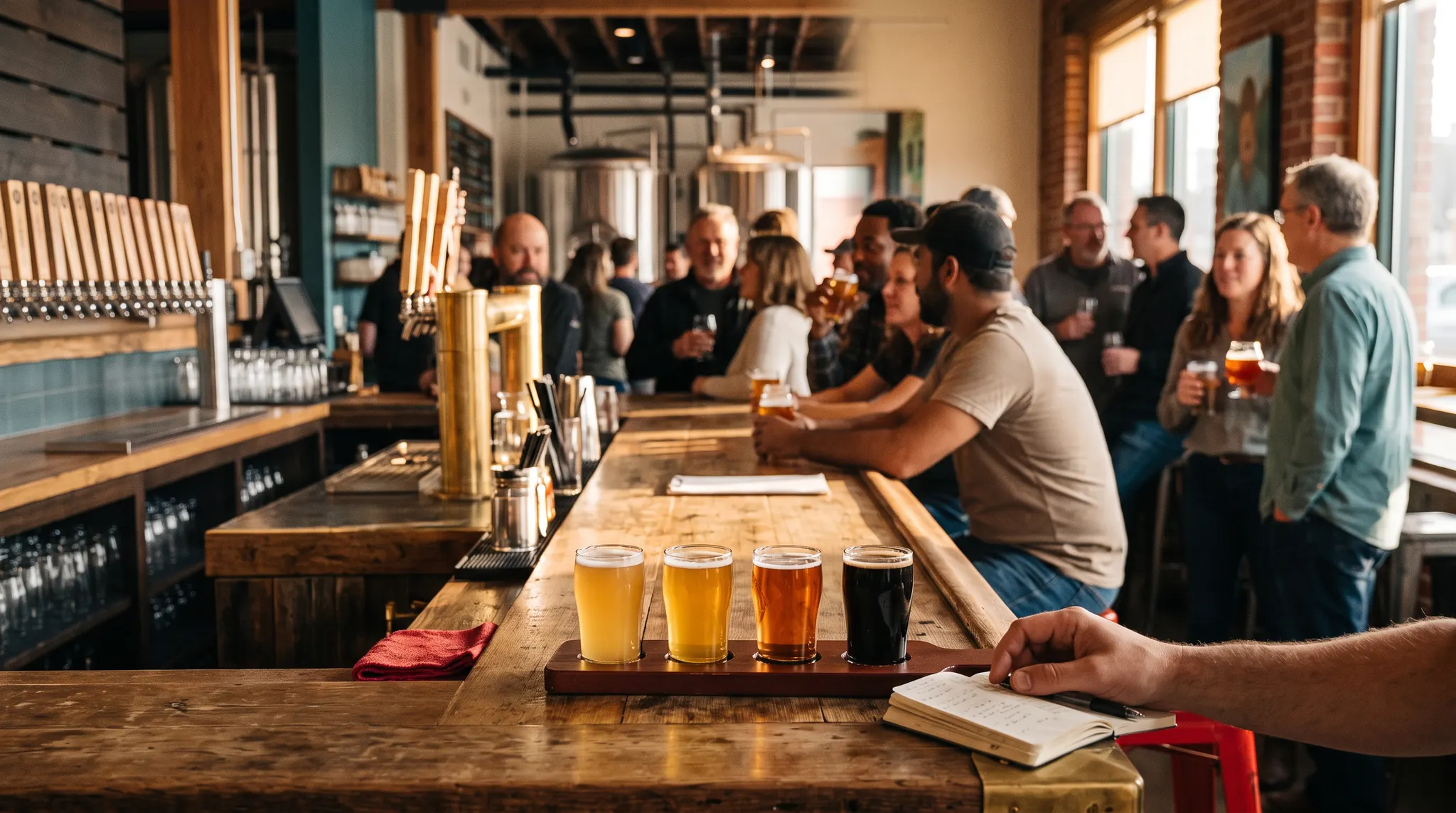
For package dates, storage, and flavor change, read Does beer expire?. To compare several draft pours without committing to full glasses, use our beer flight guide.
Related questions
Is draft beer the same as tap beer?
Usually. Both describe beer served through a faucet from a keg or bulk container.
Is draft beer always fresher than canned or bottled beer?
No. Keg turnover, cold storage, gas, balance, clean lines, and glass care all matter.
Why does draft beer sometimes taste different?
Temperature, carbonation, glassware, line condition, gas, and package age can all change the experience.